All Articles
A Home Sewer's Guide to Demystifying Thread Weights
Thread labels got you feeling tangled? Don’t worry, they confuse even the most experienced industry professionals, so you're not alone. While shopping for your next project, you've likely seen confusing terms like "Tex," "Denier," and "40wt." But these aren't just random numbers; they're the secret to finding the perfect thread for your fabric.
In this guide, we'll help untangle the mystery and show you what those labels really mean.
The Big Picture: Direct vs. Indirect Sizing
All four systems fall into two simple categories:
- Direct Systems (Tex & Denier): The number tells you the weight of a specific length of thread. A higher number means a heavier, and therefore thicker, thread. Think of it like a body mass index—more mass means a larger number.
- Indirect Systems (Weight & Metric): The number tells you the length of a specific weight of thread. A higher number means a lighter, and therefore thinner, thread. This can feel backwards, but essentially, the more length you get for the same weight, the skinnier the thread is.
The Four Main Sizing Systems
Tex (T)
The Tex system was created as a consistent, international standard for all types of textiles. It is a modern system that avoids the confusion of other methods.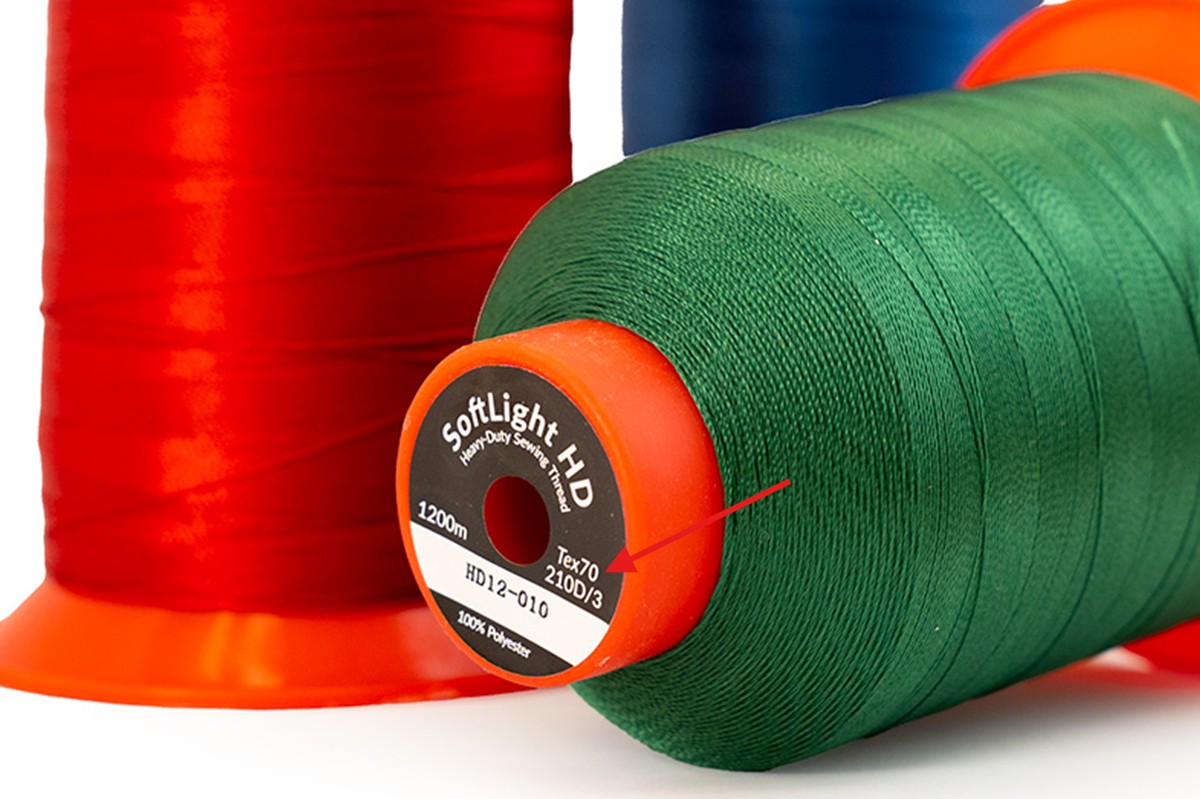
How it Works: The number represents the weight in grams of 1,000 meters of thread.
Key Rule: A higher number means a thicker thread.
Example:
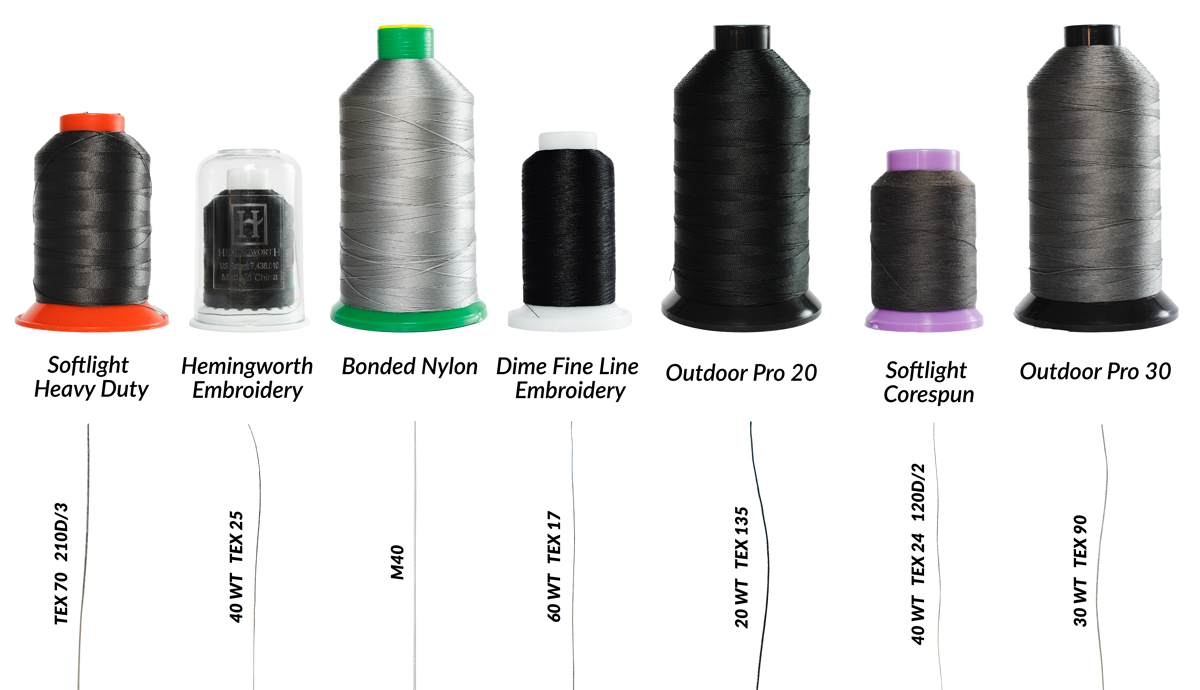
- Tex 25: This is a common weight for all-purpose sewing.
- Tex 70: This is a heavy-duty thread used for projects like upholstery or outdoor gear.
Denier (D)
The Denier system is a traditional method for measuring continuous filament threads, such as those made from silk, nylon, or polyester. The name comes from an old French coin, the denier.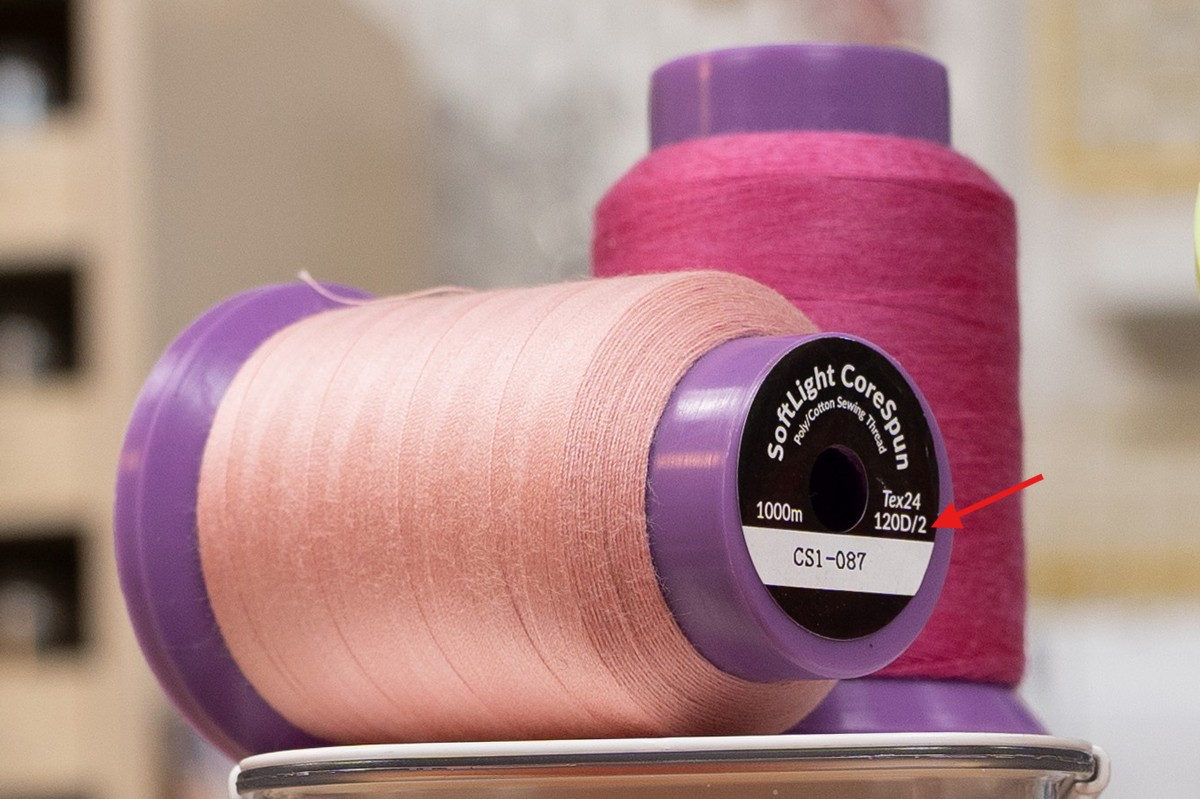
How it Works: The number represents the weight in grams of 9,000 meters of thread.
Key Rule: A higher number means a thicker thread.
Example:
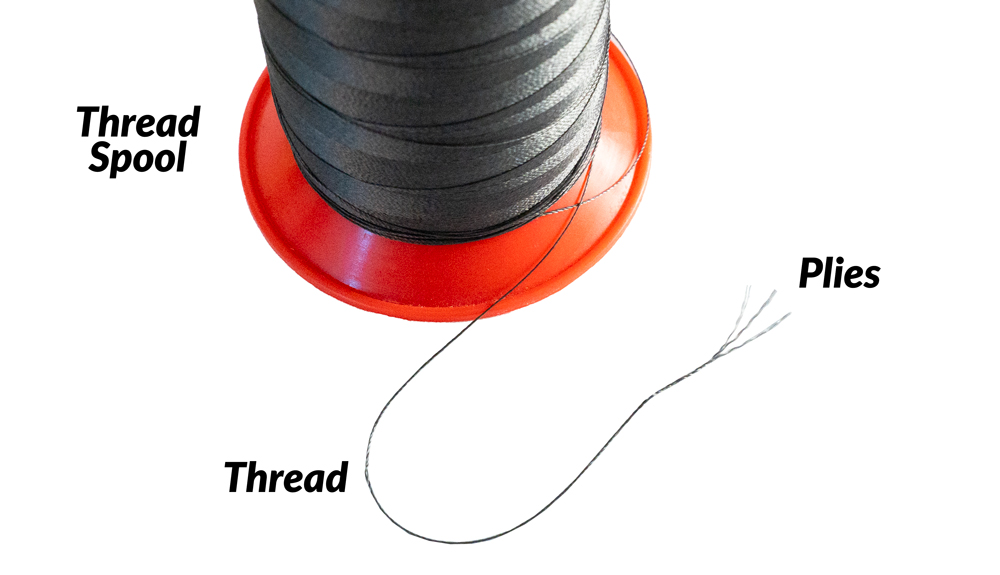
- 120D/2: This is a popular size for embroidery thread. The "120D" is the size of a single ply (strand), and the "/2" means there are two plies twisted together. The total size is 120×2=240D.
- 75D: A single-ply thread that is much finer than the 120D/2 embroidery thread.
In Practice: In the embroidery world, if you ask for "120 Denier thread," people assume you mean the standard 120D/2 (which is 40wt equivalent). If you ask for 240D, you might end up with a much thicker thread than intended. It is usually better to treat the first number (120D) as the thickness and the second (/2) as the construction.
Metric (M or Nm)
This is a traditional European system that is less common in the US, but you may still encounter it, especially with specialty threads.
How it Works: The number represents the length in meters of thread that weighs 1 gram, making it mathematically identical to the "Weight" system.
Key Rule: A higher number means a thinner thread.
Example: An M40 thread could be the same size as a 40wt thread, but not necessarily. It depends on the labelling provided by different manufacturers, which is kind of explained in the next paragraph.
Weight (W or wt)
This is the most common system in North America for home sewing, quilting, and embroidery. It's an indirect system with roots in the "Gunze Count" system from Japan.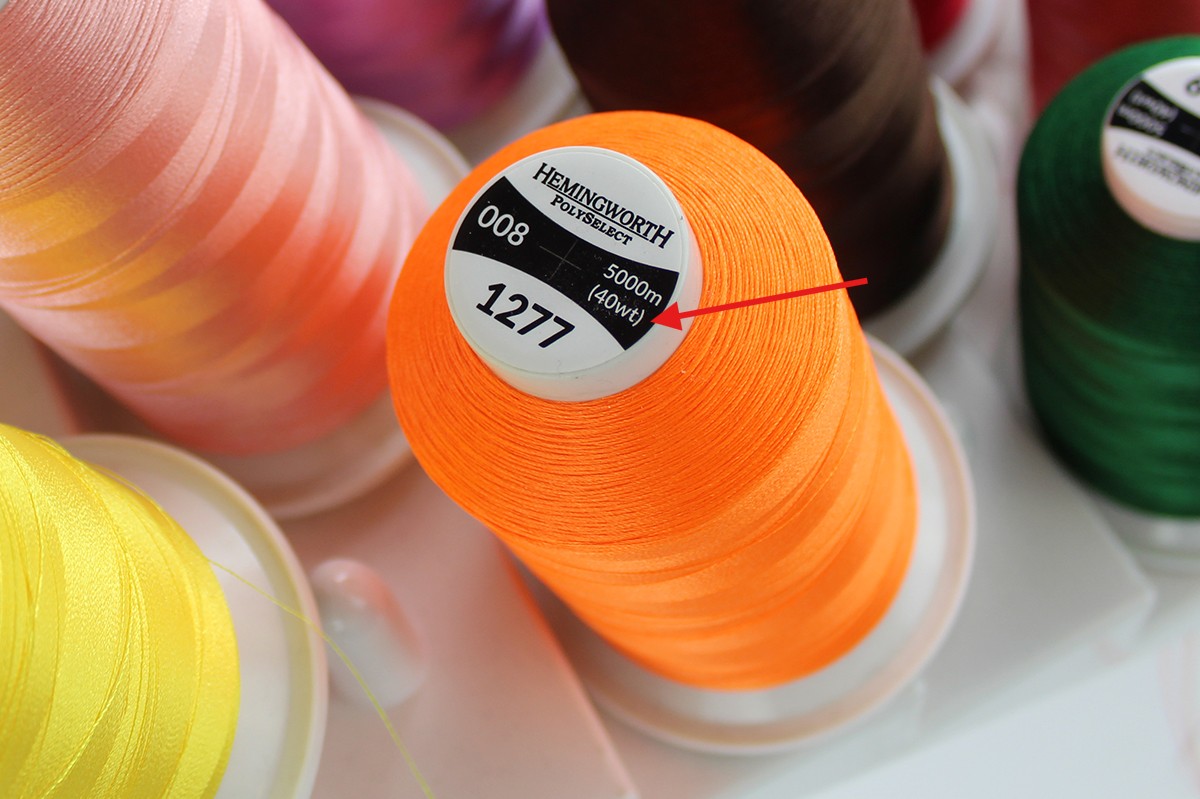
How it Works: The number represents the length in meters of thread that weighs 1 gram.
Key Rule: A smaller number means a thicker thread.
Important Note: The "Weight" system can be inconsistent because the label often simplifies the thread's actual size. It might not account for the number of plies (individual strands) or it may be a rounded number for marketing purposes. This means a 40wt from one brand might be a slightly different thickness than a 40wt from another.
Example:
- 40wt: This is the most popular all-purpose thread. You'll find it on most spools for general sewing.
- 60wt: This is a fine, thin thread, great for delicate fabrics where you don't want the stitches to show, or for intricate machine embroidery.
- 30wt: This is a thick, heavy-duty thread often used for topstitching on denim or canvas.
The Thread Sizing Cheat Sheet
Instead of memorising formulas, the easiest way to navigate these systems is with a simple chart. When you're in the store, just find the number on the thread you're looking at and match it to a known size.
| Your Project | Tex (T) | Denier (D) | Metric (M) | Weight (wt) |
|---|---|---|---|---|
| Delicate Fabrics (silk, chiffon) | T15 - T20 | 135D - 180D | M150 - M100 | 100wt - 80wt |
| General Purpose (cotton, knits) | T25 - T40 | 225D - 360D | M80 - M60 | 50wt - 40wt |
| Heavy-Duty (denim, canvas) | T40 - T70 | 360D - 630D | M60 - M40 | 30wt - 20wt |
| Upholstery / Leather | T70 - T100 | 630D - 900D | M40 - M30 | 20wt - 10wt |
Quick Tip for Plies: If you see a thread with a label like "120D/2," remember to multiply the numbers to get the total size. In this case, 120×2=240D. You can then find "240D" on the chart to see where it fits. A thread with more plies is generally stronger and more durable.
Thread weights and thicknesses are complex, and this article is not intended to be the definitive guide to the subject. It is, however, a great "rule of thumb" guide. If you use it to buy thread for a standard domestic project, you won't go wrong. Just keep in mind that the Weight (wt) system is notoriously unregulated—one brand's "40wt" is often another brand's "35wt."
By understanding these simple concepts, you can confidently choose the right thread for your next project, ensuring your stitches are strong, beautiful, and suited for the job!